

Our Story
The 20% Project grew out of a pattern we have seen again and again: the young people facing the greatest barriers are often connected to the greatest number of public systems—and fully owned by none of them.
Schools, juvenile justice, child welfare, behavioral health, workforce programs, housing systems, and community organizations may all touch a young person’s life. But too often, each is solving for its own piece of the puzzle rather than organizing together around what that young person needs to thrive.
For decades, the leaders behind The 20% Project have worked inside and alongside these systems—from alternative and correctional education and New York City’s groundbreaking Multiple Pathways to Graduation work to school-system leadership, juvenile justice reform, disability and behavioral supports, and place-based systems transformation across the country. Through ThirdWay Solutions, that work has brought educators, community leaders, government agencies, law enforcement, philanthropy, and young people together to tackle problems no single institution can solve alone.
Again and again, the lesson has been the same: when communities design around the young people their systems have failed most, they build stronger systems for everyone.
The 20% Project exists to take that lesson further. We are building a national movement—and a network of communities willing to prove what is possible—by putting the young people facing the longest odds at the center of our attention, innovation, and investment. Our goal is not to create another program around the edges of broken systems. It is to help communities redesign those systems around a shared responsibility for young people’s success.
Our impact
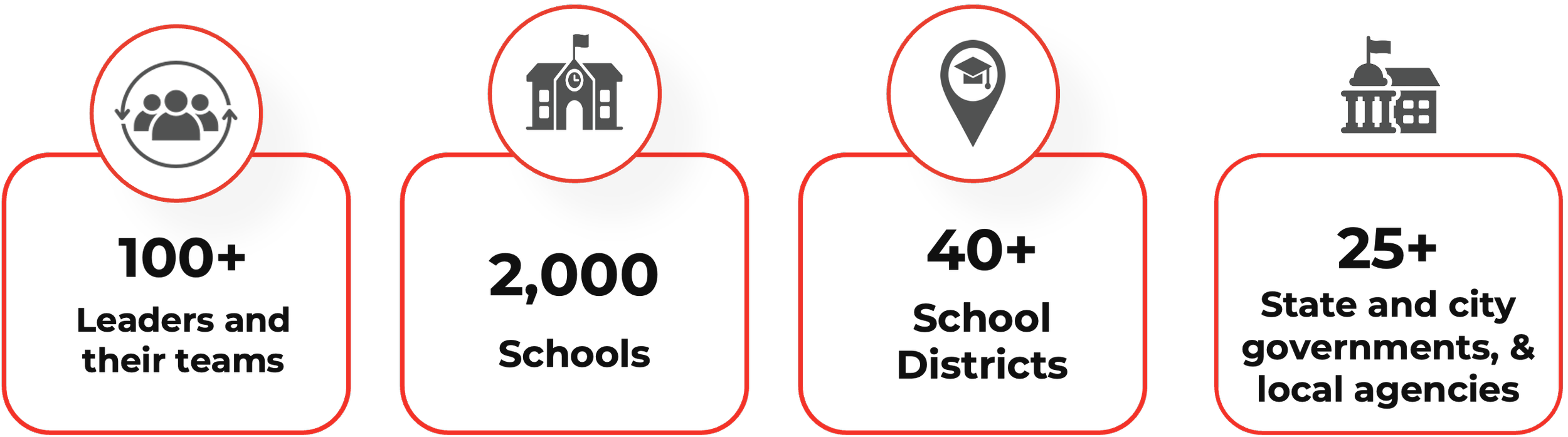
We have worked with
Clark County Student Justice Collaborative
Created one of the nation's most promising cross-agency collaborations bringing together schools, police, courts, probation, and community partners around prevention and diversion.
Discipline Reform
and School Climate
Supported coalitions and systems in Memphis, California, Texas, and New York working to reduce exclusion and keep students connected to learning.
Juvenile Justice Collaboratives
Advised states and counties on improving educational opportunities for justice-involved youth, including work in New York, Washington D.C., Nebraska, Los Angeles, and Las Vegas.
Louisiana Alternative Ed Redesign
Partnered with state leaders and districts to rethink alternative education for students most likely to become disconnected from school.