The CHallenge
Too many young people move through school and other public systems without gaining the education, support, and opportunities they need to build a future.
Some fall behind or disconnect entirely. Others graduate without the preparation or pathways needed for economic mobility. Many navigate multiple institutions, each responsible for only part of their lives.
Who are the 20%?
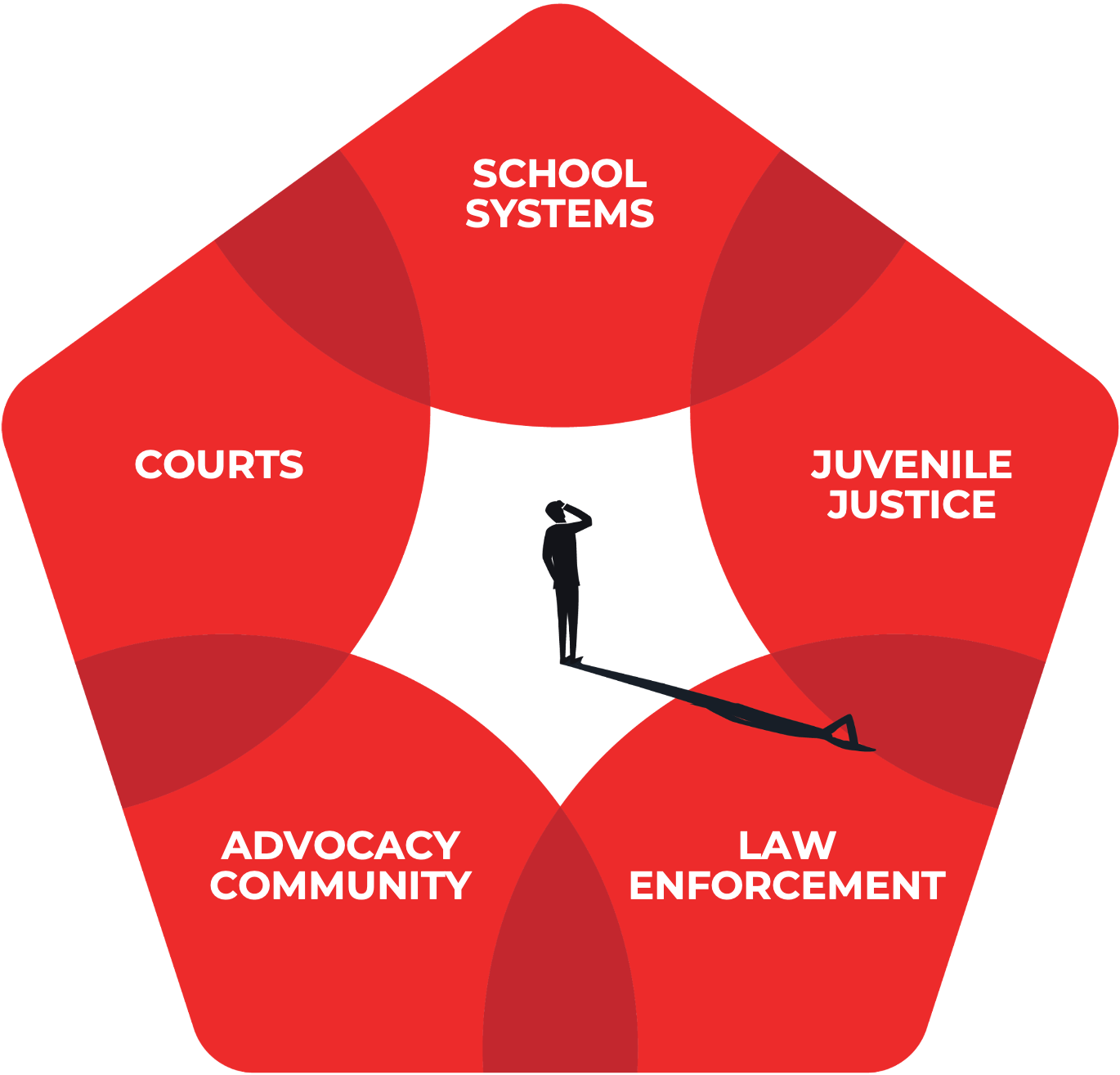
1 in 5 students is caught between multiple Public Systems.
Today, roughly 5 million young people in America are disconnected
from both school and work and nearly one in five young people who
start eighth grade are disconnected from both school and work by age 19.
Yet too many alternative schools, correctional education programs,
and workforce initiatives fail to produce tangible economic mobility.
The 20% are the young people most likely to be connected to
multiple struggling systems—and least likely to be meaningfully
served by any of them.
The consequences of disconnection
A single suspension in ninth grade makes a young person nearly 60% more likely to become justice involved the following year, setting in motion a trajectory that dramatically increases the likelihood of a lifetime of criminal justice involvement.
When young people lose their connection to education and work, the consequences can accumulate. Interrupted learning limits access to further education and employment. Exclusion and unnecessary justice involvement create additional barriers. Without strong pathways forward, an early setback can become years of lost opportunity.
A diploma alone does not resolve the problem. Young people can complete school without the academic skills, career preparation, or meaningful credentials needed to secure stable employment and build a future.
Families and communities bear the consequences, too: lost talent and earning potential, greater demand for costly crisis responses, and public resources spent managing problems that institutions have failed to resolve. These outcomes undermine economic mobility, community safety, and confidence in public systems.
The stakes are both personal and public. When young people’s potential goes unrealized, the loss reaches far beyond any one school, agency, or family.